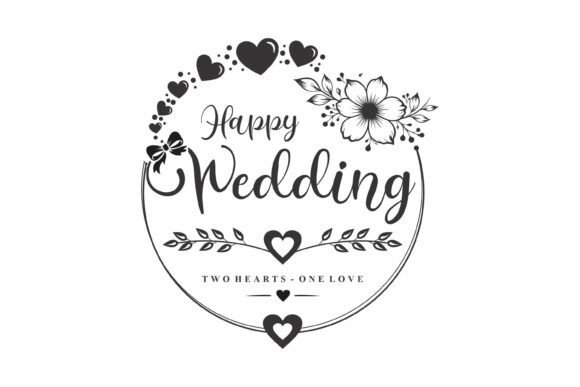
Happy Wedding Lettering: Crafting Designs with Heart and Style
There’s a particular feeling that comes with seeing a beautifully hand-lettered wedding invitation or a thoughtfully designed celebration logo. It’s personal, warm, and instantly sets the tone for the event. For designers and creatives, capturing that emotion in a digital asset is a constant pursuit. Happy Wedding Lettering steps into this space not just as a font, but as a design toolkit, offering a script typeface that carries the fluidity and joy of hand-drawn calligraphy. It’s a premium font designed to inject personality into projects that demand a touch of elegance and authenticity.
More Than Just a Script Font: Understanding Its Character
At its core, Happy Wedding Lettering is a modern script font, but that simple description undersells its versatility. Its visual appeal lies in its balanced contrast between thick and thin strokes, which mimics the natural pressure of a brush or pen. The letters connect in a flowing, cursive manner that feels organic and intentional, avoiding the stiff, overly digital look of some script fonts. This isn't a font that shouts; it communicates with grace. It carries the hallmarks of a handwritten font—the slight variations, the human touch—while maintaining the consistency needed for professional logo design and editorial layouts.
The character set is where it truly shines for wedding and event-based projects. Beyond the standard uppercase and lowercase letters, it often includes stylistic alternates, ligatures, and swashes. These aren't just decorative extras; they are functional tools. A stylistic alternate for a capital 'G' or 'S' can change the entire flow of a word, allowing a designer to craft truly unique compositions for branding or packaging design. The swashes can add a flourish at the beginning or end of a word, perfect for a headline on a wedding website or a social media graphic announcing an engagement.
Practical Applications Across the Creative Spectrum
While its name suggests a specific niche, the utility of a well-crafted script extends far beyond wedding invitations. Its inherent warmth and elegance make it a valuable asset in a designer's toolkit for a variety of projects where a personal, human touch is required.
- Brand Identity & Logo Design: For boutiques, floral studios, bakeries, event planners, or any business centered on celebrations, this font can become the cornerstone of a brand identity. Paired with a clean sans serif font, it creates a balanced and memorable logo that conveys both professionalism and approachability.
- Digital & Social Media: In the fast-scrolling world of social media, a post with beautiful typography stops the eye. Use it for Instagram quotes, Pinterest pins, Facebook event headers, or YouTube thumbnails to add a layer of sophistication and emotional resonance. It helps in building a cohesive visual language for a content creator or blogger.
- Packaging & Merchandise: Think of artisan product labels, gift tags, tote bags, or mugs. A script font like this can elevate a simple product into a premium offering. It communicates care and quality, which can be a key differentiator for small business owners selling physical goods.
- Print & Editorial Design: From magazine headlines and chapter openers to poster designs and thank-you cards, its use in print materials is vast. It excels in contexts where you want to guide the reader's emotional response, making it ideal for editorial layouts in lifestyle or bridal publications.
Integrating Happy Wedding Lettering Into Your Workflow
Acquiring a creative font is one thing; using it effectively is another. The key to leveraging Happy Wedding Lettering successfully lies in thoughtful application and testing.
Font Pairing is Everything: A script font, no matter how beautiful, rarely works alone in a professional design. The rule of contrast is your friend. Pair it with a strong, simple serif or sans serif font for body text. For example, use Happy Wedding Lettering for a main headline, and pair it with a neutral sans serif like Montserrat or Lato for supporting text. This creates a clear visual hierarchy and ensures readability. Experiment with different combinations to see what aligns with your project's goals—is it modern and clean, or classic and romantic?
Readability First: The most common mistake with decorative fonts is sacrificing legibility for style. Always test your text at the actual size it will be viewed. A flourished script that looks stunning on a large poster might become an unreadable blur on a mobile screen or a small product label. Use the font for headlines, quotes, and short phrases where its personality can shine without hindering comprehension. For longer paragraphs, always revert to a highly legible serif or sans serif typeface.
Explore the Included File Formats: The value of a premium font is often in its file package. The inclusion of EPS, AI, and CDR vector files is a significant advantage for designers. These aren't just font files; they are design assets. You can open the vector illustrations in Adobe Illustrator, CorelDRAW, or other vector software to customize individual letters, combine them into unique lockups, or extract flourishes as standalone graphic elements. This allows for a level of customization and creativity that a standard .OTF or .TTF file cannot provide, making it a versatile tool for creating bespoke logos and branding elements.
Final Considerations for Your Creative Projects
Before finalizing any design, take a moment to review the full character map of the font. You might discover alternate letters or symbols that solve a specific design problem or add that perfect finishing touch. Furthermore, if your project is for commercial use—whether it's a client's logo, merchandise for sale, or marketing materials—ensure you have the correct commercial license. This is a standard practice in the design industry and protects both you and your client.
Ultimately, a typeface like Happy Wedding Lettering is a tool for storytelling. It helps you craft a visual narrative that is personal, joyful, and refined. By understanding its strengths, pairing it wisely, and applying it with purpose, you can create designs that don't just look beautiful, but also connect with your audience on an emotional level, turning a simple project into a memorable experience.